
075582814553

Have you ever found yourself stuck between a rock and a hard place, needing powerful processing capabilities but constrained by a tight power budget and a tiny form factor? You're not alone. In a world increasingly dominated by intelligent edge devices, from smart home gadgets to sophisticated automotive sensors, the demand for power-efficient, compact, and cost-effective processing has never been higher. This is precisely where Lattice FPGA technology carves out its leadership. While giants like Xilinx and Intel have historically battled for the high-performance computing crown, Lattice Semiconductor has quietly become the go-to choice for developers building the next generation of edge solutions. In fact, the edge AI hardware market is projected to reach over $38.9 billion by 2029, and a significant portion of that growth is driven by the exact type of low-power FPGAs that Lattice specializes in.
This article is your ultimate guide to the world of Lattice FPGAs. We'll dive deep into what makes them unique, conduct a thorough product review, and compare them head-to-head with their main competitors. Whether you're an engineer designing a complex industrial system, a hobbyist working on a cool new project, or a decision-maker evaluating technology stacks, you'll walk away with a clear understanding of whether a Lattice FPGA is the right choice for you.
At its core, a Field-Programmable Gate Array (FPGA) is a semiconductor device built around a matrix of configurable logic blocks (CLBs) connected through programmable interconnects. Think of it as a blank canvas of digital logic that you, the designer, can configure to perform a specific function. Unlike a fixed-function chip like a CPU or microcontroller, an FPGA can be reprogrammed in the field, offering incredible flexibility and a faster time-to-market. For a great primer, check out this FPGA explanation on Wikipedia.
Lattice Semiconductor has carved a unique niche in this market. While other players chase raw performance, Lattice has focused on perfecting the art of the low-power, small form factor FPGA. This strategic focus has made them an indispensable partner for industries where efficiency and size are paramount.
Lattice's design philosophy is simple but powerful: deliver the most efficient processing solution in the smallest possible package. This isn't just a marketing slogan; it's a technical reality. Their devices are engineered from the ground up for minimal power draw, with some iCE40 family members boasting standby currents as low as a few dozen microamps. This makes them perfect for battery-powered devices and other applications where every milliwatt counts.
Pro Tip: When evaluating FPGAs for a battery-powered IoT device, don't just look at the active power consumption. Pay close attention to the standby or sleep current, as this is where devices spend most of their time. Lattice's ultra-low standby power can dramatically extend battery life.
Lattice isn't trying to compete with Xilinx or Intel in the high-performance data center market. Instead, they have strategically positioned themselves as the leaders in the small, power-efficient FPGA segment. This has paid off handsomely, as the demand for edge computing, IoT, and embedded vision has exploded. Their focus on providing cost-effective, easy-to-use solutions has made them a favorite among developers who need to get their products to market quickly without breaking the bank. For more on their market position, see this article from Utmel.
Lattice organizes its portfolio into clear, application-focused families. Understanding these families is key to selecting the right device for your project.
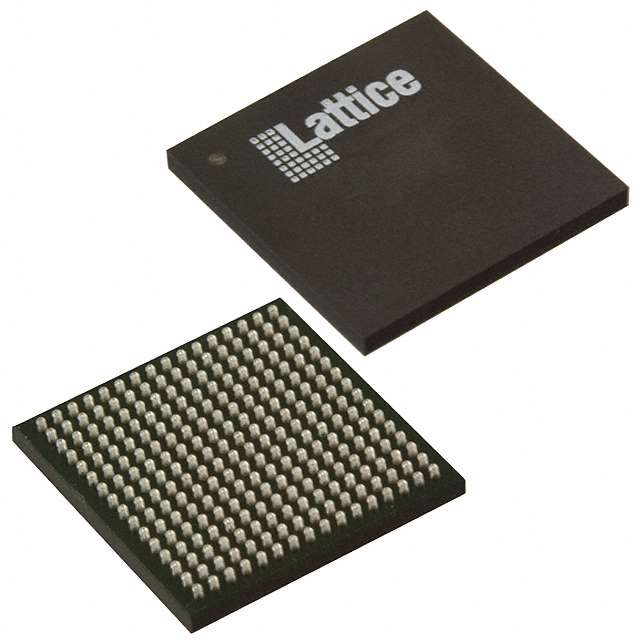
A Lattice MachXO2 FPGA, a popular choice for control and security applications.Image Source: Octopart
The Nexus platform, built on a 28nm FD-SOI process, was a game-changer for Lattice, delivering a significant leap in power efficiency and performance. The newer Avant platform builds on this success, offering up to 2.5 times lower power and a 6 times smaller form factor compared to similar FPGAs in its class. These platforms are designed for modern applications like 5G infrastructure, industrial automation, and AI at the edge.
If you're a hobbyist or maker, the iCE40 family is your entry point into the world of FPGAs. These ultra-low-power devices are famous for their simplicity and, most importantly, their support for a fully open-source toolchain (Project IceStorm). This means you can develop for iCE40 FPGAs without being tied to proprietary vendor software, a huge advantage for the open-source community. You can find many iCE40 projects and tutorials on sites like Hackaday.
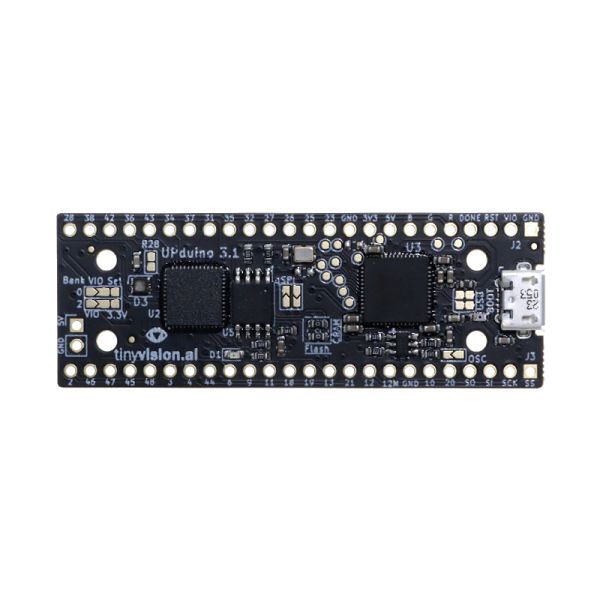
The popular iCE40-based development board, perfect for getting started with FPGAs.Image Source: Elecrow
The CrossLink family is optimized for high-speed video and sensor bridging applications, making it a popular choice for embedded vision systems, drones, and VR/AR headsets. The MachXO family, on the other hand, is the workhorse for platform management, system control, and security. These devices are often the first to power on in a system, responsible for configuring other components and ensuring a secure boot process.
Benchmarks and datasheets are one thing, but how do Lattice FPGAs perform in real-world scenarios? Let's break it down.
In numerous independent tests and customer case studies, Lattice FPGAs consistently outperform their competitors in power efficiency for low- to mid-range applications. For example, in a typical edge AI inferencing application, a Lattice Certus-NX FPGA might consume 30-50% less power than a comparable device from a competitor while delivering similar performance. This is a direct result of their optimized architecture and use of advanced manufacturing processes like FD-SOI.
Lattice provides two main software suites: Lattice Diamond for older families and Lattice Radiant for the newer Nexus and Avant platforms. Radiant offers a more modern, intuitive user interface and faster synthesis and implementation times. For beginners, the learning curve can still be steep, but Lattice provides a wealth of documentation, tutorials, and reference designs to help you get started. Their solution stacks, like sensAI for machine learning and mVision for embedded vision, provide pre-built, modular hardware and software components that can dramatically accelerate your design process.
Important Note: While the open-source toolchain for the iCE40 family is a fantastic resource, it may not have all the advanced features and optimizations of the official Lattice tools. For commercial projects, it's often best to stick with Lattice Radiant or Diamond.
How do you choose between Lattice and the industry giants? Here’s a quick comparison table to help you decide:
| Feature | Lattice FPGA | Xilinx (AMD) FPGA | Intel (Altera) FPGA |
|---|---|---|---|
| Primary Focus | Low Power, Small Size, Cost-Effective | High Performance, Advanced Features | High Performance, CPU Integration |
| Target Markets | Edge AI, IoT, Automotive, Industrial, Consumer | Data Center, Telecom, Aerospace & Defense | Data Center, High-Performance Computing |
| Key Strength | Power Efficiency | Raw Performance, Rich Feature Set | Seamless Integration with Intel CPUs |
| Software | Radiant, Diamond, Propel | Vivado, Vitis | Quartus Prime |
| Open Source Support | Excellent (for iCE40 family) | Limited | Limited |
| Best For | Battery-powered devices, embedded systems | High-end applications requiring max performance | Systems that can leverage CPU + FPGA synergy |
Choosing between Lattice and Xilinx is usually a clear-cut decision based on your application's needs. If your primary constraints are power and cost, Lattice is almost always the better choice. If you need the absolute highest performance for a task like real-time 8K video processing or complex AI training, you'll likely need the power of a Xilinx Versal or UltraScale+ device.
Intel's strength lies in its ability to integrate FPGAs with its Xeon processors, creating powerful, heterogeneous computing platforms. This is a huge advantage in the data center. However, for standalone embedded applications, Lattice often provides a more straightforward, power-efficient, and cost-effective solution. Intel's FPGAs tend to be more complex and power-hungry than their Lattice counterparts.
No product is perfect. Here’s a balanced look at the advantages and disadvantages of using Lattice FPGAs.
Unmatched Power Efficiency: The number one reason to choose Lattice. Their FPGAs are simply the best in class when it comes to low power consumption.
Compact Form Factors: With some of the smallest package sizes on the market, Lattice FPGAs can fit into designs where other FPGAs simply can't.
Cost-Effectiveness: For small to mid-range applications, Lattice offers an excellent price-to-performance ratio.
Ease of Use: With intuitive software and comprehensive solution stacks, Lattice makes it easier to get your design up and running quickly.
Open Source Community: The vibrant open-source community around the iCE40 family is a huge plus for hobbyists and educators.
High-Performance Segment: Lattice doesn't compete in the high-end FPGA market, so if you need maximum performance, you'll have to look elsewhere.
Advanced Features: Their devices may lack some of the cutting-edge features found in high-end Xilinx or Intel FPGAs, such as integrated High Bandwidth Memory (HBM).
Ecosystem Size: While growing, the Lattice ecosystem of third-party IP and development partners is smaller than that of Xilinx or Intel.
Are you wondering if a Lattice FPGA is the right fit for your project? Here are some of the top use cases where Lattice truly shines.
If you're developing a smart camera, a voice-activated assistant, or an industrial sensor node, a Lattice FPGA is an excellent choice. Their low power consumption and small size are perfect for these applications, and their sensAI solution stack provides the tools you need to implement machine learning inference at the edge efficiently.

FPGAs are playing a crucial role in the growth of Edge AI and embedded intelligence.Image Source: Intel Community
In the automotive and industrial sectors, reliability and long-term availability are key. Lattice FPGAs are designed to meet these demanding requirements, with many devices offering automotive-grade qualification and extended temperature ranges. They are commonly used for tasks like sensor fusion, motor control, and bridging different communication protocols.
Thanks to the iCE40 family and its open-source toolchain, Lattice has become a favorite in the maker and education communities. Development boards like the iCEstick and the UPduino are incredibly affordable, making them an accessible way to learn about digital logic design and FPGAs.
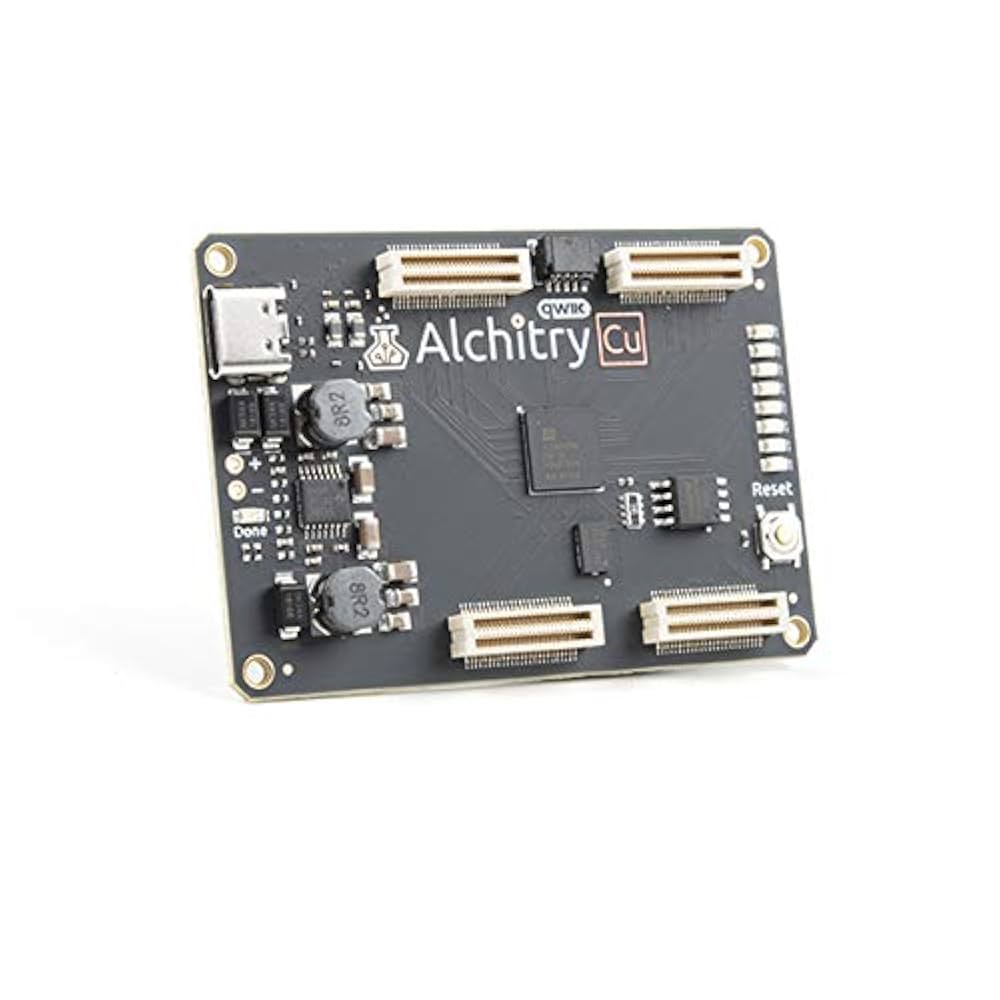
The Alchitry Cu FPGA development board, another popular choice for hobbyists and learners.Image Source: Amazon
Ready to take the plunge? Here’s what you need to know before you buy.
Logic Density: How many logic cells (LCs) do you need? Start with a rough estimate and choose a device with some headroom for future growth.
I/O Requirements: How many input/output pins do you need, and what signaling standards do they need to support?
Power Budget: What are your power consumption targets, both for active and standby modes?
Form Factor: What are the physical size constraints of your design?
Software and IP: Does Lattice provide the software tools and IP cores you need for your application?
For the Absolute Beginner: The Lattice iCEstick Evaluation Kit is a simple, USB-stick-sized board that's perfect for learning the basics.
For the Ambitious Hobbyist: The UPduino 3.0 is a low-cost, breadboard-friendly board based on the iCE40 Ultra5K FPGA.
For the Professional Developer: The Lattice Certus-NX Versa Evaluation Board provides a comprehensive platform for evaluating the capabilities of the Certus-NX family.
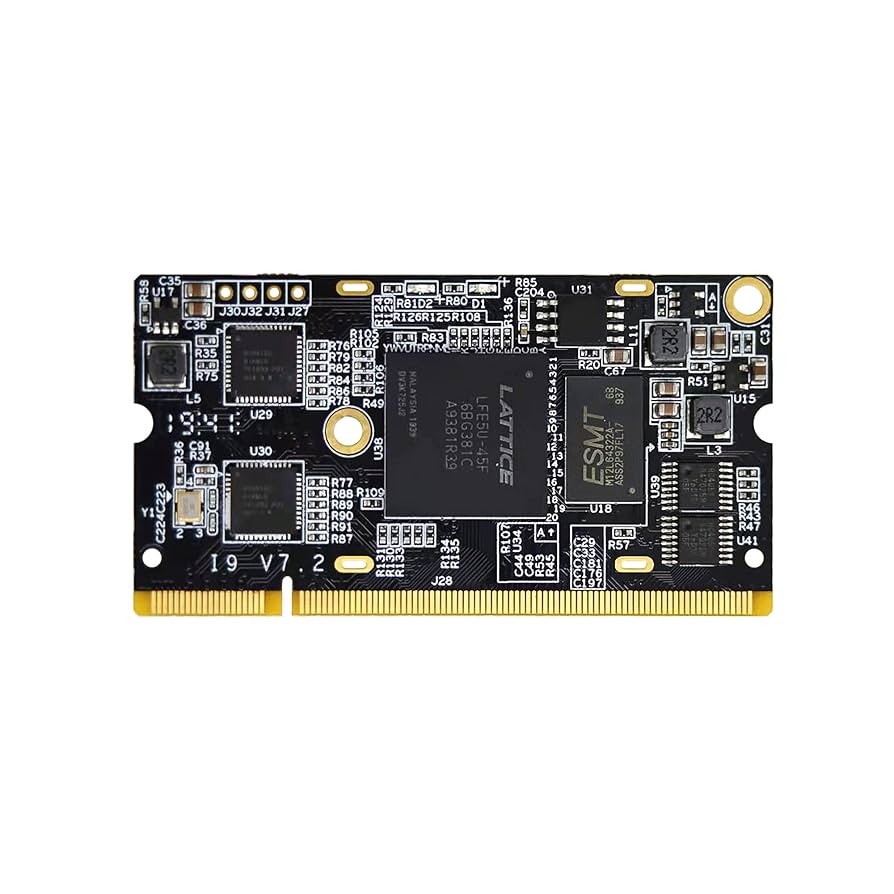
A Lattice ECP5 development board, suitable for more advanced projects.Image Source: Amazon
While the FPGA market has long been defined by a two-horse race for the high-performance crown, Lattice Semiconductor has proven that there is immense value in focusing on the needs of the rapidly expanding edge and embedded markets. Their relentless focus on low power, small size, and cost-effectiveness has made them the undisputed leader in this space.
For developers working on the next generation of IoT devices, automotive systems, and industrial automation, a Lattice FPGA is more than just a component; it's a strategic advantage. It allows you to build powerful, intelligent products that meet the tight constraints of the real world. While they may not be the right choice for every application, particularly those demanding the absolute highest levels of performance, their value proposition for their target markets is undeniable. As we move further into an era of ubiquitous, connected intelligence, the future looks very bright for Lattice and the developers who choose to build with them.
Ready to start your next project with a Lattice FPGA? Explore their full range of products and development kits on the Lattice Semiconductor website.
Is Lattice FPGA good for beginners?
Yes, Lattice is an excellent choice for beginners. The iCE40 family, in particular, is very accessible due to its low-cost development boards and support for an open-source toolchain. This makes it easy to get started without a significant financial investment or being locked into proprietary software.
What is the main difference between Lattice and Xilinx?
The main difference lies in their market focus. Lattice specializes in low-power, small form factor, and cost-effective FPGAs for the edge and embedded markets. Xilinx (now part of AMD) focuses on high-performance FPGAs and adaptive SoCs for the data center, telecommunications, and other demanding applications.
What software is used to program Lattice FPGAs?
Lattice provides its own development environments: Lattice Radiant for newer devices (like the Nexus and Avant platforms) and Lattice Diamond for older families. There is also a popular open-source toolchain called Project IceStorm that supports the iCE40 family.
Can Lattice FPGAs be used for AI applications?
Absolutely. Lattice FPGAs are very well-suited for edge AI and machine learning inference tasks. Their low power consumption makes them ideal for running AI models on battery-powered devices. Lattice also provides the sensAI solution stack to help developers optimize and deploy AI models on their FPGAs.
How much do Lattice FPGAs cost?
The cost of Lattice FPGAs varies widely depending on the specific device, its logic density, and the purchase volume. However, they are generally considered to be very cost-effective, especially for small to mid-range applications. Some of the smaller iCE40 devices can be purchased for just a few dollars in volume.

 Catalogue
 FPGA / CPLD
 Memory
 MOS
MOS  MCU
MCU  DSP
DSP OCEP
OCEP Secondary
  Other
Other 


