
075582814553

Solenoid actuators are used in engineering and automation; they can turn electrical energy into mechanical motion smoothly. These devices use the principles of electromagnetism to deliver fast and reliable movements that are key in many areas, from small locks in electronic gadgets to big tasks in industrial settings. This article will look into how solenoid actuators work, their designs, their different types, and their important roles in various industries.

Solenoid actuators convert electrical energy into mechanical motion through electromagnetism, making them basic to systems requiring fast and reliable action—from small gadget locks to used industrial machine functions. Each solenoid features a spirally wound wire coil surrounding a soft iron core, with a metal plunger held in position by a spring, poised for movement.
Upon applying electricity, the coil generates a magnetic field, attracting the core and plunger together, resulting in a rapid and smooth plunger motion into the core. This precise and controllable movement transforms electrical pulses into physical actions. The process reverses when the current ceases, with the spring quickly resetting the plunger, used for devices like automatic valves and electrical relays that require rapid cycling.

Figure 2. Solenoid Action
The efficiency of solenoids lies in their ability to operate on low-voltage signals, enabling mechanical actions that would typically require much higher power, enhancing safety and efficiency in high-voltage environments. The accuracy and reliability of solenoid operations are influenced by the plunger's alignment and timing, ensuring consistent, precise responses used for a wide array of automated and electromechanical applications.
The working principle behind a solenoid actuator begins with a tightly wound copper coil. When electricity flows through this coil, it creates a concentrated magnetic field around it. Inside this field is a ferromagnetic rod, often called a plunger, positioned so it can respond directly to the magnetic force.
As soon as the coil is energized, the magnetic field acts on the plunger, pulling or pushing it in a straight line. Whether the plunger moves inward or outward depends on the specific design of the actuator. This motion is controlled and repeatable, which is useful in systems that demand consistent accuracy—like automated equipment or safety devices. When the current stops, the magnetic field fades almost instantly. Without the magnetic pull, the plunger is returned to its original position by a spring or a similar return mechanism. This return action happens quickly and is especially important in operations that rely on fast cycling—such as cutting off fluid flow, opening or closing safety valves, or fine-tuning machine movements.
What makes solenoid actuators so effective is their ability to take a simple electrical signal and turn it into a physical movement with precise timing. This kind of indirect control means you don’t have to physically interact with high-power components, reducing risk while maintaining full control. The finer details—like how well the plunger aligns in the core or how closely its motion matches the timing of the current—have a direct impact on how well the system performs. These small factors are what allow solenoid actuators to deliver dependable results in demanding conditions.
Solenoid actuators come in several forms, each built to meet specific technical needs and environmental conditions. These variations allow you to choose a design that matches the mechanical demands of their systems while optimizing performance and energy use.
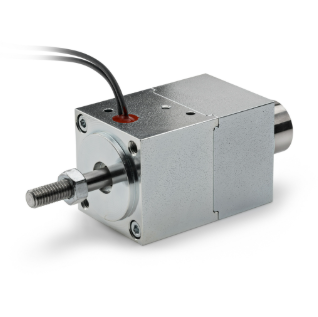
Figure 3. Push-Pull Solenoid
The most common type is the push-pull solenoid. It uses a straightforward setup: a coil, a metal plunger, and a return spring. When current flows through the coil, the plunger moves in a straight line—either extending or retracting, depending on how it’s mounted. Once power is removed, the spring pulls the plunger back to its starting point. Because of its simplicity and reliability, this design is found in everything from locks and latches to industrial automation equipment.

Figure 4. Rotary Solenoids
Rotary solenoids are designed to turn electrical energy into rotational motion. They take the linear force created by the magnetic field and convert it into a twist or turn using gears or mechanical linkages. This type of actuator is especially useful in systems where parts need to rotate to specific angles, such as in robotic joints or adjustable valve mechanisms.

Figure 5. Proportional Solenoids
For situations where precise control over movement is needed, proportional solenoids are often used. These actuators adjust the position of the plunger based on the strength of the current applied. Instead of an all-or-nothing movement, the plunger can stop at any point along its path, allowing for smooth, gradual adjustments. This makes them ideal for flow control, metering systems, and other applications where fine-tuning is a must.
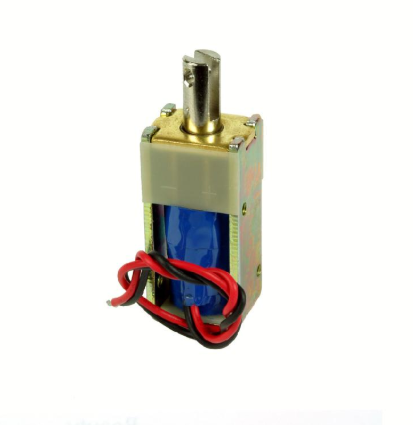
Figure 6. Latching Solenoids
Latching solenoids offer a different kind of efficiency. Instead of requiring continuous power to hold their position, they use built-in permanent magnets to keep the plunger in place after activation. Power is only needed to change states—moving the plunger in or out. This makes them especially valuable in systems where conserving energy is a must, such as battery-powered devices or equipment with limited power supply.
Solenoid actuators offer several clear benefits that make them a go-to choice in many mechanical and automation systems.
• One of their biggest strengths is the ability to deliver precise, repeatable motion. This makes them ideal for tasks that demand tight control, such as in safety devices or finely tuned machinery.
• They also respond quickly. As soon as an electric current is applied or removed, the actuator moves into position or resets almost instantly. This fast reaction time is needed in systems that need split-second performance. Because their design is relatively simple—with just a coil, a moving plunger, and a return mechanism—they typically require very little maintenance and can run reliably for long periods.
• Their compact size and low weight are also practical advantages. These features help reduce both the space needed in a system and the cost of installation. Over time, their efficiency and low power requirements can also lead to savings in energy use and upkeep.
Solenoid actuators do have some limitations that need to be considered before choosing them for a specific task.
• They typically provide only a limited range of motion and force. In applications that require more power or longer mechanical travel, solenoids may fall short and need to be supplemented or replaced with a different type of actuator.
• Another challenge is heat buildup. As current flows through the coil, electrical resistance produces heat. If the actuator is used continuously or under heavy load, that heat can accumulate and reduce performance or even cause damage unless there are cooling systems in place.
• Electromagnetic interference is another concern. The magnetic field generated during operation can disrupt nearby sensitive electronics. Proper shielding and smart placement are often required to avoid unwanted interference.
• In some setups, the noise produced by the actuator—mainly from the quick movement of mechanical parts and the sudden shift in magnetic fields—can also be an issue, especially in environments where quiet operation is important.
Selecting the right solenoid actuator starts with a careful review of how it will be used in a specific system. Each application has unique demands, so the actuator must be matched to those needs to ensure reliable performance and a long service life.
• Start by confirming that the actuator can deliver the right amount of force and has a stroke length that fits the mechanical movement required. If the actuator can’t move far enough or push with enough strength, it may fail to complete its task efficiently or consistently.
• Next, check that the actuator’s voltage and current ratings are compatible with your power supply and control systems. Mismatched electrical characteristics can lead to poor performance, component damage, or system instability.
• Temperature also plays a significant role. Every actuator has a range of temperatures where it performs well. If it's placed in an environment that's too hot or too cold, it could overheat, slow down, or fail. Be sure to verify the ambient temperature range the actuator will experience during both operation and standby.
• Consider how frequently the actuator will be used. The duty cycle tells you how often the actuator can operate in a set time without overheating. In systems that activate the actuator repeatedly—especially in rapid succession—you’ll need a model designed for high-duty use to avoid thermal buildup and long-term wear.
• Environmental conditions also affect actuator selection. High humidity, dust, or exposure to corrosive chemicals can wear down components or interfere with movement. If the actuator will be exposed to harsh surroundings, look for materials and protective coatings designed to resist these elements.
• Finally, think about installation. The size and shape of the actuator must fit within the available space, and its mounting setup should work smoothly with your system’s mechanical layout. Choosing an actuator that fits easily can prevent delays and unnecessary modifications during assembly.
Reviewing each of these factors before installation—mechanical needs, electrical compatibility, environmental exposure, and space constraints—you’ll not only make a smarter selection but also improve the system’s overall reliability and lifespan. Taking the time to plan carefully helps ensure the solenoid actuator performs as expected, with fewer issues down the road.
Solenoid actuators are found in a wide range of industries because of their ability to deliver consistent, precise movement in compact, efficient packages. Their responsiveness and durability make them ideal for systems that require fast, repeatable actions with minimal maintenance.
In the automotive, solenoids are useful to both safety and performance. They drive the locking and unlocking of car doors by quickly moving internal mechanisms when triggered. In more complex systems like fuel injection, solenoids help control the timing and delivery of fuel into the engine, which improves fuel efficiency and combustion. They are also used in transmission systems to manage gear changes, where their fast and accurate actuation supports smooth and reliable shifting.
Aerospace systems rely heavily on solenoid actuators for operations where precision is non-negotiable. Landing gear systems, for example, depend on solenoids to deploy and retract components at the exact right moments. The same is true for flight control surfaces, where solenoids help adjust parts like flaps or rudders. These applications require repeatable motion under strict performance and safety standards.
In industrial automation, solenoids keep production lines running smoothly. On conveyor systems, they start and stop the flow of materials at the right time to coordinate with other processes. In robotics, they help execute complex mechanical movements with accuracy, often triggering actions like clamping, rotating, or positioning. Packaging machines also use solenoids to sort, move, and assemble parts quickly, contributing to high throughput and minimal error.
The medical field also benefits from the precise motion control that the solenoids provide. In drug delivery systems, they help release accurate doses of medication at scheduled intervals. Diagnostic machines, such as blood analyzers or imaging devices, often use solenoids to control small internal components that need to move reliably without delays or errors.
Even in household appliances, solenoids play important roles. Washing machines and dishwashers rely on them to manage water flow, switch between cycles, or control detergent release—tasks that require accurate timing and fluid movement in a compact space.
| Aspect | Solenoids | Linear Actuators |
| Motion Type | Straight-line (linear) motion | Straight-line (linear) motion |
| Power Consumption | Only during activation; low energy usage | Requires continuous power while moving; higher energy consumption |
| Best Use Cases | Quick, occasional actions (e.g., releasing a lock, triggering a latch) | Sustained, controlled movement (e.g., robotic arms, adjustable beds) |
| Control Precision | Simple on/off control; fully extended or retracted positions | High precision with adjustable speed, position, and force using sensors and feedback systems |
| Speed of Response | Very fast activation; ideal for rapid actions | Slower, smoother movement; suited for long travel or fine control tasks |
| Ease of Integration | Simple to install and control | Requires more complex setup and control logic |
| Durability | Suited for light-duty, intermittent use; prone to wear under constant use | Designed for frequent, long-duration tasks; handles repeated motion well |
| Load Capacity | Lower; best for lighter mechanical loads | Higher; suitable for moving heavy objects and withstanding demanding industrial environments |
| Application Examples | Locks, valves, emergency systems | Automation equipment, medical beds, industrial machinery |
| Selection Criteria | Use when fast, simple, and occasional motion is needed with minimal power draw | Use when motion needs to be continuous, precise, and able to handle heavy loads |
| Cost & Efficiency | Cost-effective for basic, infrequent tasks | Justified cost for high-performance, reliable, and controlled operations |
Solenoid actuators are ultimate in modern automation and mechanical systems. They offer precise and quick actions with little need for upkeep, making them useful in many dangerous settings. Whether it's for consistent accuracy in industrial automation, dependable performance in car systems, or precise control in medical equipment, solenoid actuators are versatile. It's important for you to understand how these actuators work, along with their benefits and limitations, to make the most of them in different applications.

 Catalogue
 FPGA / CPLD
 Memory
 MOS
 MCU
 DSP
 OCEP
 Secondary
 Other


