
075582814553

Light sensors are basic components in modern electronics, enabling devices to perceive and respond to changing light conditions with precision and intelligence. In this article, we explore the details of light sensors, including how they work, their key types, applications, technical specifications, and how to choose and integrate them effectively into your designs.

Figure 1. Light Sensors
A light sensor is an electronic device that detects and measures the intensity of light in its environment. It converts light energy, whether visible, infrared (IR), or ultraviolet (UV), into electrical signals. Light sensors are used to measure brightness (illuminance), respond to light-level changes, or even convert light directly into electrical power.
| Parameter | Description |
| Spectral Range | Detects visible (400–700 nm), infrared, and UV light |
| Sensitivity | Measures low light levels, typically in lux |
| Response Time | Reacts within milliseconds or faster |
| Output Type | Analog (voltage/current) or Digital (I²C, SPI, UART) |
| Operating Voltage | Typically 3.3V or 5V |
| Accuracy | Usually within ±5% |
| Temperature Range | Operates from -40°C to +85°C |
| Power Consumption | Low power for extended battery life |
Light sensors function by converting light energy into electrical signals, using two key physical principles: the photoelectric effect and the photovoltaic effect.
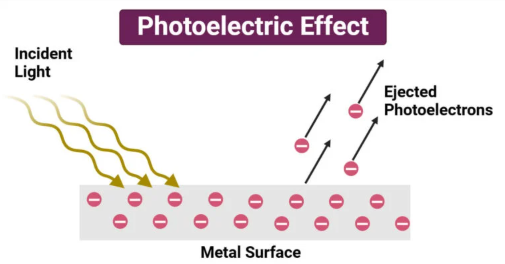
Figure 2. Photoelectric Effect
• Photoelectric Effect: When photons (light particles) hit a photosensitive material, they transfer their energy to electrons within the material. If the photon energy is sufficient, these electrons are ejected from the material’s surface. This release of electrons produces a small current that can be measured. This principle is commonly used in photodiodes and phototransistors, especially for detecting rapid changes in light intensity.

Figure 3. Photovoltaic Effect
• Photovoltaic Effect: In this effect, incident light energizes electrons, but instead of being ejected, the electrons are excited to a higher energy state within the material. This creates a voltage difference across a junction, resulting in a flow of current without an external power source. This is the basis for solar cells and many light sensor modules used in ambient light detection.
Light sensors come in various forms, each tailored to specific sensing tasks and application requirements. Understanding the differences between these types helps in selecting the right sensor for your design:
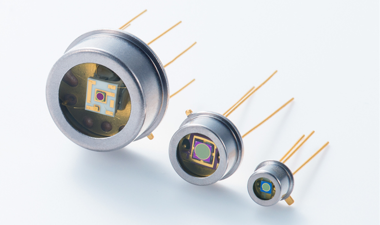
Figure 4. Photodiodes
• Photodiodes: Photodiodes are semiconductor devices that produce an electrical current when exposed to light. Known for their fast response time and high accuracy, they are ideal for detecting rapid changes in light intensity. Photodiodes are widely used in optical communication systems, barcode scanners, and scientific instruments that demand precision.
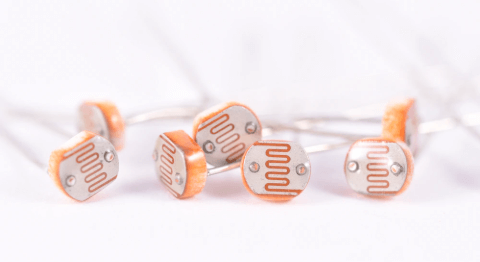
Figure 5. Photoresistors (LDRs)
• Photoresistors (LDRs): Also known as Light Dependent Resistors, photoresistors are passive components whose resistance decreases as ambient light levels increase. They are simple, cost-effective, and widely used in applications like automatic lighting, garden lamps, and light-activated alarms where sensitivity to ambient light is more important than speed or accuracy.
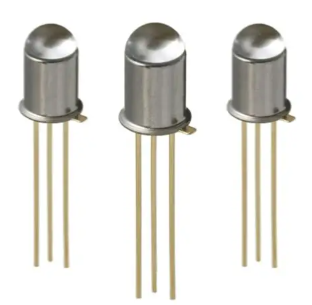
Figure 6. Phototransistors
• Phototransistors: Phototransistors are transistors that respond to light instead of electrical input at the base terminal. They offer greater current amplification (gain) than photodiodes, making them suitable for applications that require switching or light-level triggering, such as optical sensors in automation systems, object counters, and reflective sensors.
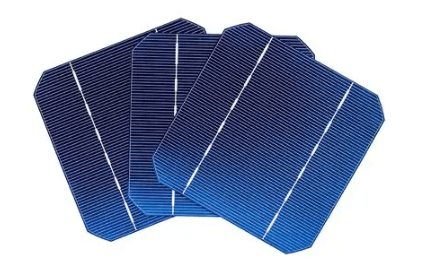
Figure 7. Photovoltaic Cells (Solar Cells)
• Photovoltaic Cells (Solar Cells): These sensors convert light energy, mainly sunlight, directly into electrical power through the photovoltaic effect. Photovoltaic cells are the core of solar panels and are widely used in renewable energy systems, outdoor calculators, and standalone power supplies for remote sensors or devices.
• Consumer Electronics: Light sensors are widely used in smartphones, tablets, laptops, and smart TVs to automatically adjust screen brightness based on ambient light levels. This enhances your comfort by reducing glare in bright environments or dimming displays in the dark, while also conserving battery life.
• Automotive Systems: In modern vehicles, ambient light sensors enable automatic headlight activation when it gets dark and deactivate them during daylight. They also power adaptive dashboard lighting systems, ensuring optimal visibility without driver distraction. Advanced driver-assistance systems (ADAS) may use light sensors to support camera-based detection performance under varying lighting conditions.
• Agriculture: In precision farming, light sensors help monitor sunlight exposure to optimize irrigation schedules, greenhouse lighting, and crop placement. By analyzing daily light integrals (DLI), you can ensure plants receive ideal photosynthetic light levels, boosting yield and energy efficiency.
• Security Systems: Light sensors enhance intrusion detection by monitoring sudden or unexpected changes in ambient light, such as a flashlight beam or an opened container in a secure area. Combined with alarms or motion sensors, they provide an additional layer of passive surveillance in homes, safes, and industrial facilities.
• Robotics & Automation: Robots often rely on light sensors for tasks like line following, object detection, and environmental feedback. In industrial automation, they help machines recognize part positions or transitions on conveyor belts using reflective or interruptive sensing.
• Environmental Monitoring: In environmental research and climate observation, light sensors track sunlight exposure, solar radiation, and photoperiod changes. These insights support studies related to plant growth, urban lighting design, weather patterns, and solar energy system performance.
• Energy Efficiency: Light sensors help reduce energy consumption by adjusting artificial lighting or display brightness based on surrounding natural light. This is particularly beneficial in smart homes, offices, and outdoor lighting systems where lighting adapts dynamically to daylight conditions.
• Enhanced Your Experience: Devices like smartphones, tablets, and laptops use light sensors to automatically optimize screen brightness. This improves visibility in different lighting environments and reduces eye strain, delivering a smoother and more personalized experience.
• Automation & Safety: By enabling automatic responses to changing light levels, light sensors support intelligent features in vehicles (like auto headlights), smart appliances, and industrial systems. These enhancements contribute to greater convenience, operational efficiency, and safety.
• Environmental Awareness: Light sensors enable accurate monitoring of sunlight exposure, UV intensity, and day/night cycles, which are needed for environmental research, agriculture, and solar energy management. They support immediate data collection for informed decision-making and sustainability.
| Model | Type | Interface | Typical Use Case |
| BH1750 | Ambient Light Sensor | I²C | Power-efficient brightness sensing |
| TSL2561 | Dual-channel (Visible + IR) | I²C | Color-sensitive detection and lux readings |
| APDS-9960 | Light + Gesture Sensor | I²C | Touchless control, RGB sensing |
| MAX44009 | High-Lux Ambient Sensor | I²C | Industrial lighting systems |
| ML8511 | UV Light Sensor | Analog | Sunlight and UV index measurement |
| TEMT6000 | Analog Light Sensor | Analog | General-purpose ambient light detection |
• Sensitivity & Detection Threshold – How responsive and precise the sensor is at detecting low light or small changes in illumination
• Spectral Response & Light Type (UV/Visible/IR) – Which wavelengths the sensor can detect and whether it matches the human eye spectrum or rejects IR for accuracy
• Power Consumption & Supply Compatibility – Sensor power needs, including low‑power or battery operation and compatibility with existing power systems
• Integration & Output Interface – Whether the sensor output is analog or digital, voltage levels, and compatibility with controllers or host systems
• Size, Mounting & Form Factor – Physical dimensions, ease of integration into fixtures or devices, and mounting style
• Response Time & Stability – Speed of reaction to light changes and measurement consistency over time
• Environment & Robustness – Resistance to temperature, dust, humidity, IR interference, and other real-world conditions
Light sensors may occasionally produce inconsistent readings, fail to trigger, or stop responding. Here are some common issues and solutions:
• No Output Signal – Check wiring, power supply, and confirm correct pin configuration. For I²C sensors, ensure pull-up resistors are present.
• Fluctuating or Noisy Readings – Use signal smoothing techniques like averaging in software or add capacitive filtering on the analog output.
• Incorrect Light Level Measurement – Recalibrate using a known reference. Environmental interference (e.g., reflective surfaces or heat) may also affect accuracy.
• Sensor Not Detected (Digital Modules) – Confirm correct I²C address and bus initialization in code. Use a scanner sketch to detect connected devices.
• Slow Response or Lag – Reduce sampling delay or check if sensor firmware or library settings allow faster refresh rates.
Light sensors are becoming in-demand components in the Internet of Things (IoT) ecosystem. They enable immediate automation in smart homes, offices, and cities by adjusting lighting based on occupancy and natural light availability. Integrated with connected systems, they help optimize energy use, reduce utility costs, and enhance overall system responsiveness.
Emerging applications of light sensors are focusing on human-centric lighting. By monitoring ambient light and adjusting indoor lighting accordingly, these systems help regulate circadian rhythms, supporting better sleep, mood, and productivity. This trend is gaining traction in residential spaces, hospitals, elder care facilities, and wellness-centered environments.
Ongoing research and development are pushing the boundaries of light sensor capabilities. Innovations are leading to sensors with broader spectral sensitivity (including near-infrared and UV), enhanced precision, and faster response times. Additionally, advancements in miniaturization and integration with other sensor types are enabling more compact, multifunctional designs suitable for wearables, mobile devices, and embedded systems.
In autonomous robots, drones, and self-driving vehicles, light sensors are used in environmental awareness. They assist with lane detection, obstacle recognition, and adaptive vision under changing lighting conditions. Their integration with machine learning and computer vision is expected to drive further improvements in navigation, object tracking, and overall system safety.
Whether you’re building smart lighting or embedded systems, light sensors offer efficiency, adaptability, and precision. By selecting the right type and properly integrating and calibrating it, you can unlock responsive, future-ready designs.

 Catalogue
 FPGA / CPLD
 Memory
 MOS
MOS  MCU
MCU  DSP
DSP OCEP
OCEP Secondary
  Other
Other 


