
075582814553

The LM7805 voltage regulator is a basic component in electronics, known for its ability to deliver a stable 5V output from a higher DC input. In this article, we'll explore how the LM7805 works, how to use it in your circuits, and what to consider for optimal performance, thermal management, and circuit design.
The LM7805 is a widely used linear voltage regulator that provides a fixed and stable 5V DC output. It is part of the 78xx series of regulators, where "xx" indicates the output voltage; hence, the "05" corresponds to 5 volts. This device is designed to step down and regulate higher input voltages, typically ranging from 7V to 35V, to a consistent 5V output, making it ideal for low-voltage electronics.
One of the key features of the LM7805 is its internal circuitry, which includes current limiting, thermal shutdown, and safe-area protection. These built-in protections enhance system stability and prevent damage under fault conditions.
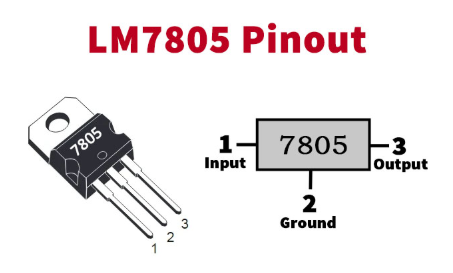
Figure 1. LM7805 Pinout
The LM7805 operates as a linear voltage regulator, using a combination of an internal voltage reference, an error amplifier, and a pass transistor to deliver a constant 5V output regardless of changes in input voltage or output current (within rated limits). The internal reference sets a precise 5V level, while the error amplifier continuously compares this reference to the output voltage and adjusts the pass transistor to correct any deviation.
To function correctly, the LM7805 requires the input voltage to be at least 2 volts higher than the output voltage, typically a minimum of 7V, to account for its dropout voltage. If the input drops too close to 5V, the regulator can no longer maintain proper regulation.
A typical LM7805 circuit includes the following capacitors:
1. 0.33 µF ceramic capacitor between VIN and GND: Placed close to the input pin, this capacitor filters out high-frequency noise and stabilizes the input voltage. It’s particularly important when the regulator is powered by a switching supply or a long wire that might introduce electrical noise.
2. 0.1 µF ceramic capacitor between VOUT and GND: Positioned near the output pin, this capacitor helps maintain output stability and prevents oscillation by filtering out transient voltage spikes.
3. Optional 10 µF (or higher) electrolytic capacitors on both input and output: These are often added in parallel with the ceramic capacitors to provide bulk decoupling. They improve low-frequency filtering and help maintain regulation during sudden load changes. Larger values (like 100 µF) may be used for higher current applications or when driving inductive loads such as motors or relays.
| Parameter | Value/Description |
| Input Voltage Range | 7V to 35V. Input must be at least 2V higher than output (dropout voltage). |
| Output Voltage | Fixed 5V ±2%. Maintains tight regulation under normal load and temperature conditions. |
| Maximum Output Current | Up to 1.5A with proper heat dissipation (e.g., heatsink or thermal pad). |
| Typical Dropout Voltage | Approximately 2V. Input should not fall below ~7V to ensure 5V output stability. |
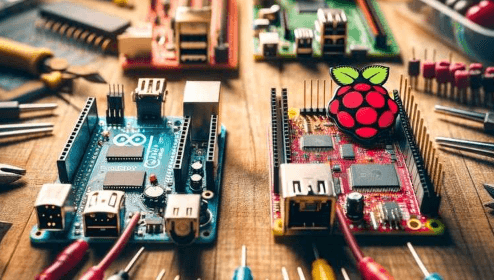
Figure 2. Microcontroller-Based Projects (Arduino, Raspberry Pi, PIC)
• Microcontroller-Based Projects (Arduino, Raspberry Pi, PIC): Many development boards and standalone microcontroller circuits rely on a clean 5V supply. The LM7805 is ideal for powering these systems, especially when the input source is a higher voltage wall adapter or battery pack.
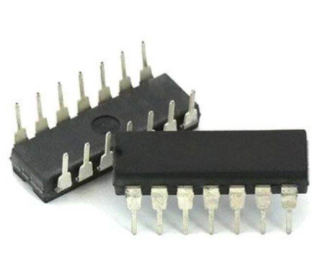
Figure 3. TTL Logic and Digital ICs
• TTL Logic and Digital ICs: 5V-tolerant logic families such as 74LS, 74HC, or older TTL chips require precise voltage levels to operate correctly. The LM7805 ensures a stable supply to prevent erratic behavior or logic-level mismatches.
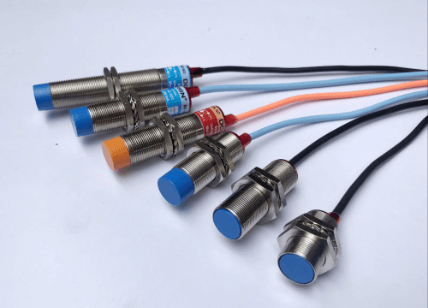
Figure 4. Analog Sensors
• Analog Sensors and Signal Conditioning Circuits: Many analog sensors and amplifiers need a low-noise, regulated 5V source for accurate signal processing. The LM7805 is often used to provide stable biasing in temperature sensors, photodiodes, and audio preamp circuits.
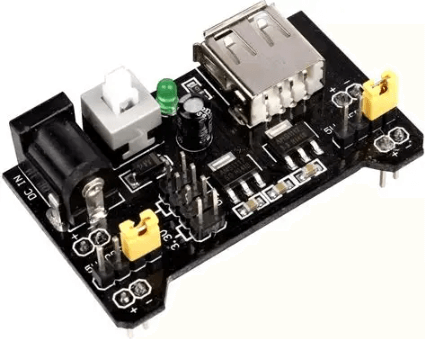
Figure 5. Breadboard Power Supplies
• Breadboard Power Supplies: In prototyping environments, the LM7805 is frequently integrated into breadboard-compatible power modules to convert 9V batteries or 12V adapters into a usable 5V rail.

Figure 6. Embedded Systems
• Regulated DC Rails in Embedded Designs: In embedded systems, the LM7805 often powers peripheral devices, communication modules (like Bluetooth, GPS, or GSM), and other 5V-dependent subsystems from a common unregulated DC input.
When selecting a voltage regulator, it's important to consider factors such as output voltage flexibility, efficiency, noise sensitivity, and application type. Here's how the LM7805 compares with other popular voltage regulation options like the LM317 and LM2596 buck converter:
| Regulator | Type | Output Voltage | Efficiency | Adjustable | Best Use Case |
| LM7805 | Linear | Fixed 5V | Low (~40–60%) | No | Simple, low-noise, 5V-specific circuits |
| LM317 | Linear | 1.25V to 37V (adjustable) | Low (~40–60%) | Yes | Applications needing custom output voltages |
| LM2596 | Switching (Buck Converter) | Adjustable | High (70–90%) | Yes | Power-efficient, battery-powered, or high-load systems |
| Problem | Likely Cause | Solution |
| No Output Voltage | Incorrect wiring or no input voltage | Double-check the pin configuration (VIN, GND, VOUT). Use a multimeter to verify that the input voltage is present and above 7V. Also, confirm that the ground is properly connected. |
| Regulator Overheating | Excessive power dissipation without cooling | Attach a heatsink to the TO-220 package. Improve ventilation or use thermal pads. Consider switching to a buck converter if power loss is excessive. |
| Output Voltage < 5V | Input voltage is too low, or the current demand is too high | Ensure the input voltage is at least 2V above the 5V output (preferably ≥7V). Reduce the load current, or use a higher capacity regulator or heatsink. |
| Excessive Output Noise or Instability | Missing or poorly placed bypass capacitors | Add recommended ceramic capacitors: 0.33 µF between VIN and GND, and 0.1 µF between VOUT and GND. Place them as close to the IC pins as possible to suppress oscillations and ripple. |
• Place Bypass Capacitors Close to the Regulator Pins: Always mount the 0.33 µF input capacitor and 0.1 µF output capacitor as close as possible to the VIN and VOUT pins of the LM7805. This minimizes parasitic inductance and helps suppress high-frequency oscillations, ripple, and voltage spikes.
• Use Wide Traces for High-Current Paths: The traces carrying input and output current—particularly the GND and VOUT lines—should be wide enough to handle the expected current without causing significant voltage drops or generating heat. Wider traces also reduce resistance and electromagnetic interference (EMI).
• Implement Solid Ground Planes: If possible, use a continuous ground plane beneath the regulator and related components. This provides a low-impedance return path for current and minimizes noise coupling between different parts of the circuit.
• Include Thermal Vias for SMD Versions: If you're using a surface-mount (SMD) version of the LM7805 (or an equivalent LDO regulator), place thermal vias beneath the regulator’s thermal pad to transfer heat to inner or bottom copper layers. This significantly improves thermal dissipation, especially in compact or sealed enclosures.
• Keep Sensitive Nodes Away from Hot Areas: Place heat-sensitive components such as microcontrollers, precision analog ICs, and temperature sensors away from the regulator and its heat-dissipating zone to avoid thermal interference or drift.
• Minimize Loop Area in Power and Ground Paths: Keeping the input and output loop areas small helps reduce radiated EMI and improves overall circuit stability, especially important in mixed-signal or RF applications.
• Choose a Reputable Manufacturer: Stick with well-known brands. Those companies offer regulators that meet quality standards, with comprehensive datasheets and proven performance across a wide range of conditions.
• Select the Right Package Type: The TO-220 package is the most popular option due to its easy mounting, robust leads, and excellent thermal dissipation capabilities. It allows the use of external heatsinks, which is useful when powering higher-current loads or stepping down from a high input voltage. For space-constrained designs, you can also find LM7805-compatible regulators in TO-92, DPAK, or SOT-223 surface-mount packages, but these offer reduced current handling and limited heat dissipation.
• Verify Current Requirements: The LM7805 can deliver up to 1.5A of output current with adequate cooling.
• Review the Datasheet Carefully: Even among LM7805 regulators from different manufacturers, performance specs such as dropout voltage, thermal resistance, quiescent current, and short-circuit behavior may vary slightly.
The LM7805 remains a trusted choice for generating a clean 5V power supply in electronics, thanks to its ease of use, robust protections, and widespread availability. While it may not offer the highest efficiency compared to modern switching regulators, its simplicity and reliability make it a go-to solution for many low- to moderate-power applications. By following best practices in design, layout, and thermal management, you can ensure your LM7805-based circuits perform safely and consistently in a wide range of environments.

 Catalogue
 FPGA / CPLD
 Memory
 MOS
MOS  MCU
MCU  DSP
DSP OCEP
OCEP Secondary
  Other
Other