2N3904 and 2N2222 NPN Bipolar Junction Transistors: Pin Configuration, Packaging, Performance Features, Applications, and Complementarity
FREE-SKY (HK) ELECTRONICS CO.,LIMITED / 06-02 18:33
In the modern field of electronics, the essence of circuit design largely depends on transistors, with electronic devices primarily relying on them for signal amplification and switching current. The tech realm has witnessed various transistor variants, among which Bipolar Junction Transistors (BJTs) and Field-Effect Transistors (FETs) stand out for their unique advantages in a plethora of applications. Notably, the NPN bipolar transistors 2N3904 and 2N2222, known for their exceptional electrical properties, are renowned for their versatility, ranging from basic switching to complex amplification tasks.
Catalog
1. Introduction to 2N2222 and 2N3904 Transistors
2. Pin Configuration of 2N2222 and 2N3904 Transistors
3. Packaging of 2N2222 and 2N3904 Transistors
4. Performance Characteristics of 2N2222 and 2N3904 Transistors
5. Applications of 2N2222 and 2N3904 Transistors
6. 2N2222 and 2N3904 Transistors: How to Choose the Right One?
7. Complementary PNP Transistors for 2N2222 and 2N3904
8. Conclusion
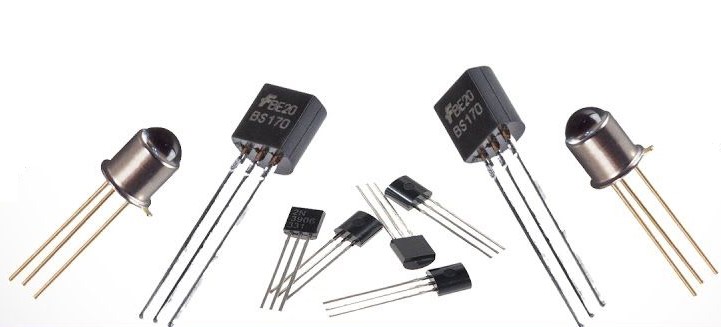
Figure 1: Transistors
Introduction to 2N2222 and 2N3904 Transistors
Transistors: 2N2222 and 2N3904
• Basic Structure: NPN
• Effective current amplification mechanism
The 2N3904 and 2N2222 transistors epitomize the classic NPN structure (two N-type semiconductor layers supporting a P-type layer), excelling ineffective current amplification.
2N3904 Transistor
• Commonly utilized
• Suitable for low current, low power consumption
• Maximum Collector Current: 200mA
• Collector-Emitter Voltage: Up to 40V
• Continuous power without external charge: Up to 30 hours
The 2N3904 is favored for its cost-effectiveness and broad applicability, performing admirably in environments requiring minimal current and power. It is capable of handling currents up to 200mA and enduring voltages up to 40V, highlighting its adaptability and ensuring stable performance across different voltage levels. Notably, it can autonomously power devices for up to 30 hours, demonstrating excellent energy management capability, making it highly suitable for devices needing extended lifespan and minimal power consumption.
2N2222 Transistor
• Handles larger operating currents
• Maximum Collector Current: 1A
• Suitable for high-end devices
• Compact and adaptable
Conversely, the 2N2222 transistor is characterized by its ability to manage higher currents up to 1A, while still maintaining a maximum collector-emitter voltage of 40V, ensuring the circuit's normal operation over a wide voltage range. The 2N2222 is suited for power-intensive devices like digital cameras and LED flashlights. Its compact size allows seamless integration into complex circuits, adapting to fluctuating power requirements, and highlighting the adaptability of transistor technology. Despite sharing the NPN configuration, these two transistors differ in handling capacity and power consumption, leading to their suitability for different circuit design requirements.
Therefore, the choice between 2N3904 and 2N2222 depends on the specific design challenge at hand, with each transistor offering unique advantages to engineers. This exploration not only emphasizes their functional diversity but also aids in making informed decisions to meet varying circuit design needs.
Pin Configuration of 2N2222 and 2N3904 Transistors
In electronic circuit design and assembly, both 2N3904 and 2N2222 serve as NPN bipolar junction transistors, offering similar functionalities like amplification and switching. However, they exhibit notable differences in pin configuration, necessitating careful consideration during circuit layout.
2N3904 Transistor Pinout
• Configuration: Linear
• Sequence (Facing Flat Surface): Emitter (E), Base (B), Collector (C)
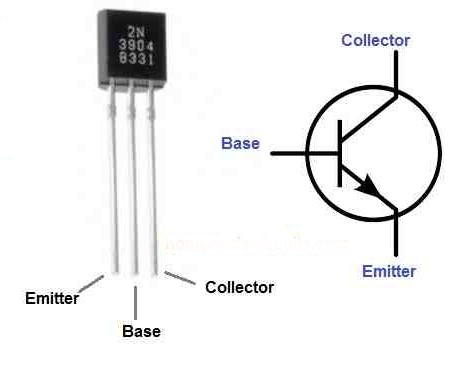
The 2N3904 transistor features a linear pin sequence, facilitating direct integration into circuit boards, accommodating the emitter (E), base (B), and collector (C) from left to right when viewed from its plane. This arrangement suits direct, side-by-side component placement if space permits.
Figure 2: 2N3904 Pinout
2N2222 Transistor Pinout
• Configuration: Inverted Triangle
• Sequence (Facing Marked Side): Emitter (E), Base (B), Collector (C)
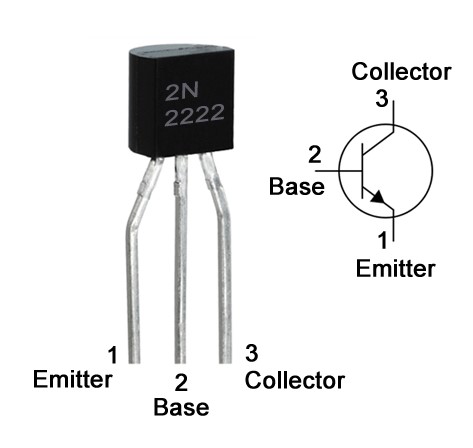
The non-linear pin arrangement (inverted triangle) of the 2N2222 transistor complicates manual soldering and automatic component placement, especially for technicians accustomed to linear pin layouts. Facing the transistor's marking side, the typical understanding is that the left pin represents the emitter (E), the middle pin the base (B), and the right pin the collector (C), though variations may exist across different packaging types and manufacturers' products. This layout demands meticulous attention during the circuit board design process to ensure accurate connection of each pin within the circuit.
Figure 3: 2N2222 Pinout
The differing pin configurations (linear for 2N3904 and inverted triangle for 2N2222) not only affect circuit board design and assembly but may also impact the thermal and electrical performance of the transistors. For example, the closer spacing allowed by the 2N2222's arrangement can reduce the overall size of the circuit board to some extent. However, to leverage this advantage, thermal management must be carefully considered to prevent overheating and performance degradation.
Packaging of 2N2222 and 2N3904 Transistors
Selecting the appropriate packaging for transistors significantly impacts their functionality, lifespan, and applicability. This is especially true for the widely used NPN bipolar junction transistors, 2N3904, and 2N2222. Their packaging not only reflects their physical attributes but also directly influences thermal management, size, and application specificity.
2N3904 Transistor Package
• Common Type: TO-92
• Attributes: Low cost, Small size, Easy soldering
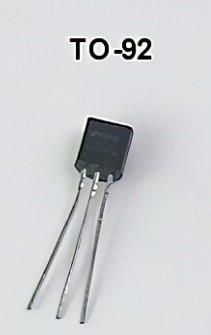
The 2N3904 transistor primarily utilizes the TO-92 package. The TO-92 package is esteemed by engineers for its economy, compactness, and ease of soldering, effectively utilizing materials to lower production costs, making the 2N3904 transistor a perfect match for applications requiring low power consumption and minimal space. While the TO-92 package provides adequate functionality for the 2N3904 and suffices for many uses, its relatively lower heat dissipation affects performance in environments requiring high temperatures or significant power.
Figure 4: 2N3904 Package
Although the TO-92 package suits many medium to low-power applications, its plastic encapsulation might not perform as well as metal packages in high-temperature settings, especially where higher power handling is required.
2N2222 Transistor Package
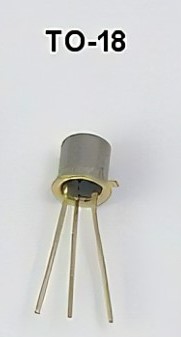
• Common Type: TO-18
• Advantages: Superior thermal conductivity, Durability, Mechanical strength
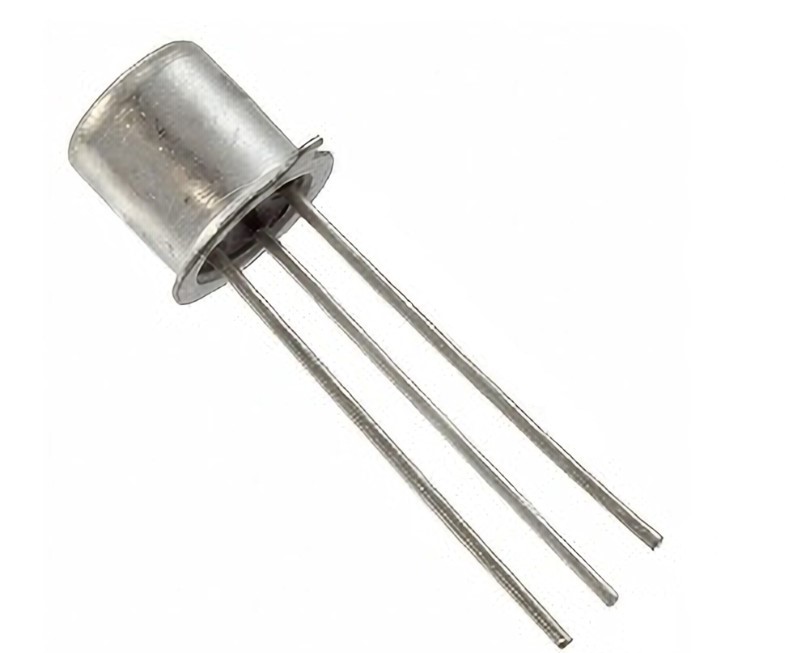
The 2N2222 transistor often comes in a metal TO-18 package, significantly enhancing thermal conductivity. The metal casing not only boosts heat dissipation but also strengthens the transistor's durability and mechanical strength. This makes the 2N2222 particularly suited for high-temperature environments or applications requiring robust power consumption, such as industrial controls and automotive electronics. Despite the higher cost and larger size of the TO-18 package compared to the TO-92, its superior thermal stability and structural integrity perform exceptionally well under harsh conditions.
Figure 5: 2N2222 Package
Performance Characteristics of 2N2222 and 2N3904 Transistors
Both the 2N2222 and 2N3904 transistors are NPN bipolar junction transistors, widely used across various electronic circuits due to their unique performance characteristics that meet specific requirements. However, 2N2222 and 2N3904 also display some noticeable performance differences.
2N3904 Transistor
• Maximum Collector Current: 200mA
• Collector-Emitter Voltage (VCEO): Up to 40V
• Designed for Low current, Low to medium power applications
The 2N3904 is favored for its versatility and cost-effectiveness, particularly in low-current and medium-power settings. It supports a maximum collector current of 200mA, making it highly suitable for sensor networks and electronic projects involving signal amplification and lightweight switching. Its ability to handle up to 40V of collector-emitter voltage offers tremendous design flexibility. Combined with its rapid switching capability, it becomes the preferred choice for mid to low-frequency signal amplification in contemporary high-speed circuit designs.
2N2222 Transistor
• Maximum Collector Current: 1A
• Collector-Emitter Voltage (VCEO): 30V to 40V
• Suited for High current, Larger load applications
On the other hand, the 2N2222 transistor excels in scenarios requiring higher current handling, capable of up to 1A. This is suitable for driving motors, managing large lighting systems, and other high-load situations. Its collector-emitter voltage range is similar to that of the 2N3904, supporting a variety of circuit designs. The 2N2222's robustness in handling heavier loads and its exceptional thermal stability enhances its reliability in complex, high-current output circuits.
Although both the 2N2222 and 2N3904 transistors provide outstanding performance, their unique characteristics determine their suitability for different applications: the 2N3904 is the go-to for low power consumption and non-high-speed operations, while the 2N2222 excels in high-current applications.
Applications of 2N2222 and 2N3904 Transistors
The 2N3904 and 2N2222 NPN bipolar junction transistors each have their unique application scenarios, mainly determined by their electrical characteristics and performance parameters.
2N3904 Transistor Applications
• Suited for low-power tasks
• Ideal for low- to medium-power audio and signal amplifiers
• Employed in LED control and small relay switching
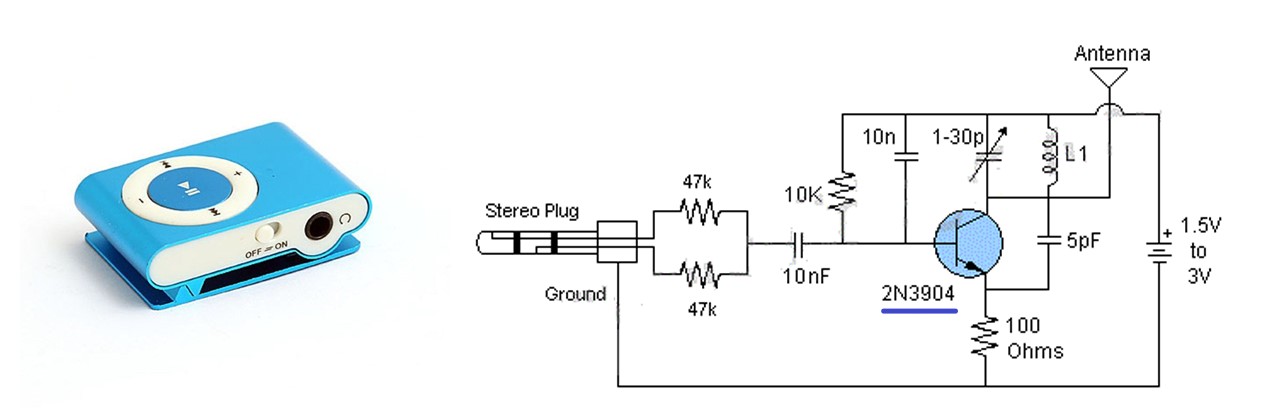
The 2N3904 is typically used in medium to low-power applications, such as audio and signal amplifiers, benefiting from its adequate gain and quick switching for LED and small relay control. Its stable amplification and fast response make it an excellent choice for small signal processing and logic control tasks in both analog and digital circuits.
Figure 6: 2N3904 Application
2N2222 Transistor Applications
• Tailored for high power and high current uses
• Drives larger loads like high-power LEDs and motors
• Amplifies RF signals in wireless communication
• Powers audio amplifiers' stages to drive speakers
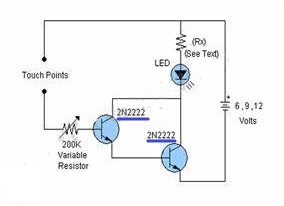
The 2N2222 dominates in high-power and current applications, capable of handling up to 1A of current. It effectively drives larger load applications like high-power LEDs, motors, and large relays, which generally require significant current to operate properly.
Figure 7: 2N2222 Application
The application scope of the 2N2222 also extends to RF (Radio Frequency) amplification, particularly in the field of wireless communications, and powering audio amplifiers to drive speakers. Due to its high collector current capability, the 2N2222 is also commonly used in the power stages of audio amplifiers, tasked with amplifying audio signals to drive speakers. For occasions requiring control of large currents, such as some high-current switching applications, the 2N2222 also demonstrates its strong performance.
When choosing between the 2N3904 or 2N2222 transistors, designers need to accurately evaluate the application's power requirements, current handling capacity, switching speed, and frequency response demands. Designers can select the most suitable transistor based on the specific needs of the application, whether it's for efficient signal amplification, precise logic control, or powerful load-driving capabilities. Proper application of these transistors can not only enhance circuit performance but also increase the reliability and efficiency of the entire system.
2N2222 and 2N3904 Transistors: How to Choose the Right One?
Choosing between the 2N3904 and 2N2222 transistors requires understanding their characteristics, including current handling, voltage tolerance, power consumption, gain bandwidth product, and packaging, among other basic parameters, to match circuit requirements.
Maximum Collector Current (Ic)
• 2N3904: Up to 200mA
• 2N2222: Up to 1A
The 2N3904 has a capacity of 200mA, suitable for medium to low-power tasks, making it ideal for signal amplification, small load switching, and powering small devices like LED drivers and miniature relay switches (e.g., for low-power LEDs).
The 2N2222 can handle currents up to 1A, making it highly suitable for controlling motors or powering high-power LED lighting systems and other heavier load applications.
Maximum Collector-Emitter Voltage (VCEO)
Both the 2N3904 and 2N2222 have a common voltage capacity of 40V, but variations between models exist, so it's necessary to ensure voltage flexibility to prevent damage.
Power Dissipation (Pd)
• 2N2222 excels in high-power applications
• 2N3904 is optimized for scenarios with minimal power demands
The 2N2222's higher power dissipation allows it to manage more power without overheating, suitable for applications requiring continuous high currents.
The 2N3904's lower dissipation suits tasks with lower demands, helping with temperature control and prolonging lifespan.
Gain Bandwidth Product (fT)
• 2N3904: Higher fT values, favoring high-frequency applications
• 2N2222: Sufficient for standard applications with its stable gain
Due to its excellent gain bandwidth, the 2N3904 typically excels in high-frequency applications (offering higher fT values), making it the prime choice for rapid signal processing. Although the 2N2222 may slightly lag in this regard, its consistent gain ensures reliable performance for standard uses.
Package Type
• 2N3904: TO-92 plastic package, ideal for low-power, cost-sensitive projects
• 2N2222: TO-18 metal package, suited for high-power tasks and challenging environments
The choice of packaging affects the thermal and structural durability of the 2N3904 and 2N2222 transistors; the TO-92 plastic package of the 2N3904 offers cost-effectiveness for low-power scenarios, while the TO-18 metal package of the 2N2222 supports higher power needs and harsh conditions with better thermal conductivity and resilience. The metal packaging not only improves the transistor's durability but also helps reduce performance variations due to temperature fluctuations, favoring overall circuit stability and reliability.
In practical circuit design, choosing the right transistor involves a comprehensive assessment of these factors based on project requirements to ensure optimal performance and stability. For instance, the 2N3904 might be the preferred choice for low-power and high-frequency applications. For applications needing to manage high currents, significant power consumption, or operate in harsh environments, the 2N2222 will provide better performance and higher reliability.
Complementary PNP Transistors for 2N2222 and 2N3904
NPN bipolar junction transistors, particularly the 2N3904 and 2N2222, stand out for their widespread usage and functionality, especially when used in conjunction with their PNP counterparts, the 2N3906 and 2N2907. These complementary pairs significantly broaden the application spectrum, particularly in push-pull configurations, thereby enhancing circuit efficiency and design flexibility.
2N3904 and Its PNP Counterpart: 2N3906
• Complementary Pairing: Ideal for push-pull amplifier designs
• Maximum Collector Current: 200mA
• Maximum Collector-Emitter Voltage: -40V
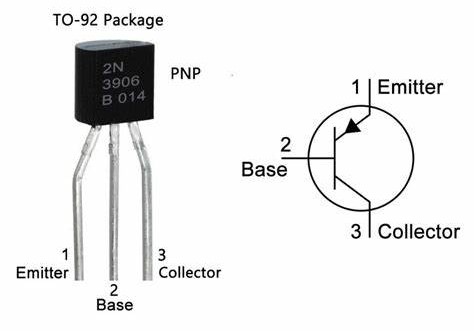
The 2N3904 pairs complementarily with the 2N3906 PNP transistor. Despite their differing polarities, they share highly similar electrical characteristics and physical configurations (physical packaging and pin configurations) with each other. This pairing facilitates bidirectional current flow in push-pull amplifier setups, enhancing dynamic range and output power. The 2N3906 is suitable for medium to low power settings, supporting a maximum collector current of 200mA and a collector-emitter voltage of -40V, matching the precise control and low-power switching capabilities of the 2N3904. This makes this pair highly suitable for medium to low-power applications, such as small signal amplification, low-power switching, and some precision control applications.
Figure 8: 2N3906 Transistor
2N2222 and Its PNP Counterpart: 2N2907
• Complementary Pairing: Suited for high power output and bidirectional current control
• Maximum Collector Current: Up to 600mA
• Maximum Collector-Emitter Voltage: -60V
Conversely, the combination of the 2N2222 and the 2N2907 PNP transistor can meet higher power requirements and bidirectional current control, suitable for high-fidelity audio amplifiers and complex switching circuits. The 2N2907 is the PNP complement to the 2N2222, capable of handling up to 600mA of collector current and a collector-emitter voltage of -60V.
Figure 9: 2N2907 Transistor
Utilizing complementary transistor pairings like the 2N3904 and 2N3906, or the 2N2222 and 2N2907, can enhance circuit performance and energy efficiency, reduce heat output, and potentially extend battery life. Their broad application potential covers audio amplification, power management systems, and automation controls, consolidating their key role in precise load management.
Conclusion
The 2N3904 and 2N2222 share the NPN structure and function in amplification and switching and are similar in many ways. While there are subtle differences in their characteristics and applications, in some instances, the 2N3904 and 2N2222 allow for interchangeability in specific scenarios. Designers must consider these differences, including current handling and packaging type, to fully leverage their potential in circuit designs.



 Catalogue
 FPGA / CPLD
 Memory
 MOS
MOS  MCU
MCU  DSP
DSP OCEP
OCEP Secondary
  Other
Other 


