
075582814553

You’ve probably seen the AG10 battery inside small devices like watches, toys, or remote controls, but choosing the right one can be tricky with all the similar codes and replacements out there. If you’re wondering which one to buy or what makes the AG10 different from others, you’re in the right place. In this article, let’s discuss about AG10 battery specifications, AG10 battery applications, AG10 battery replacement and equivalent, etc.
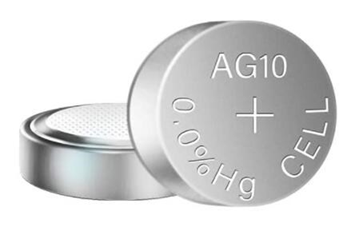
Figure 1. AG10 Battery
The AG10 battery is a small, round alkaline coin cell designed for low-power electronic devices. AG10 battery size measures 11.6 mm in diameter and 3.1 mm in height. Delivering a 1.5-volt output. Its compact size and reliable performance make it ideal as small electronics battery for everyday items like watches, calculators, laser pointers, thermometers, and small toys.
You may also see the AG10 battery labeled under different names, including LR1130 battery, battery code LR54, L1131 battery, 189, and 389A. These names follow different naming standards, IEC uses codes like LR1130, while ANSI/NEDA uses numbers like 189. Despite the varied labels, they all point to the same battery type with minor differences, if any.
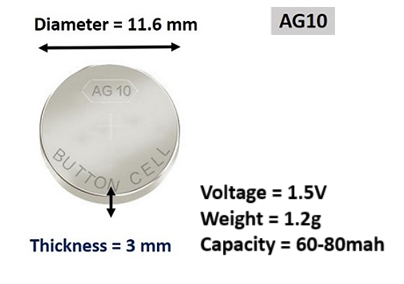
Figure 2. AG10 Battery Size
| Attribute | AG10 Battery Details |
| Battery Type | Non-rechargeable alkaline button cell |
| Shape & Size | Flat disc shape, ~11.6 mm diameter × ~3.1 mm height |
| Nominal Voltage | 1.5 volts (alkaline) / 1.55 volts (silver oxide variants) |
| Typical Capacity | Ranges between 50 to 100 mAh depending on brand and chemistry |
| Internal Chemistry | Zinc–manganese dioxide with alkaline electrolyte |
| Average Weight | Ab0ut 1 to 1.8 grams per cell |
| Electrical Resistance | Around 15 kΩ (varies with brand and load) |
| Operating Temp. | Functional between -20°C to +60°C (-4°F to 140°F) |
| Ideal Temp. Range | Performs best near room temperature (~21°C) |
| Discharge Profile | Continuous power output for small, low-drain devices |
| Shelf Life | Up to 5 years in proper storage conditions |
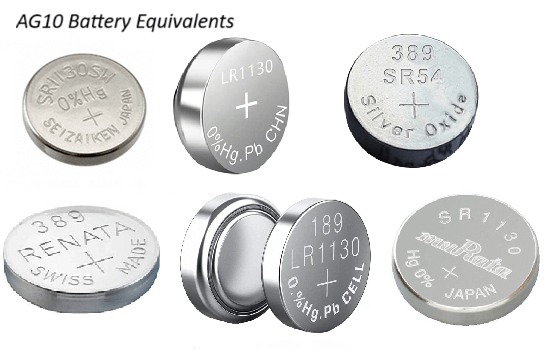
Figure 3. AG10 Battery Equivalents and Replacement
| Model | Chemistry | Voltage | Capacity | Shelf Life | Discharge Rate |
| LR54 | Alkaline | 1.5 V | ~60–80 mAh | 2–3 years | Low-drain |
| L1131 | Alkaline | 1.5 V | ~60–80 mAh | 2–3 years | Low-drain |
| 389 (SR54) | Silver-0xide | 1.55 V | ~150 mAh | 3–5 years | Low t0 moderate |
| SR1130W | Silver-0xide | 1.55 V | ~150 mAh | 3–5 years | Low t0 moderate |
| SR1130 | Silver-0xide | 1.55 V | ~150 mAh | 3–5 years | Low t0 moderate |
| V389 | Silver-0xide | 1.55 V | ~150 mAh | 3–5 years | Low t0 moderate |
| 626 | Silver-0xide | 1.55 V | ~150 mAh | 3–5 years | Low t0 moderate |
| GP389 | Silver-0xide | 1.55 V | ~150 mAh | 3–5 years | Low t0 moderate |
| 389 | Silver-Oxide | 1.55 V | ~150 mAh | 3–5 years | Low to moderate |
| 189 | Alkaline | 1.5 V | ~60–80 mAh | 2–3 years | Low-drain |
| G10 | Alkaline | 1.5 V | ~60–80 mAh | 2–3 years | Low-drain |
| V10GA | Alkaline | 1.5 V | ~60–80 mAh | 2–3 years | Low-drain |
| LR1130 | Alkaline | 1.5 V | ~60–80 mAh | 2–3 years | Low-drain |
| GP189 | Alkaline | 1.5 V | ~60–80 mAh | 2–3 years | Low-drain |
| SG10 | Alkaline | 1.5 V | ~60–80 mAh | 2–3 years | Low-drain |
| A389 | Silver-Oxide | 1.55 V | ~150 mAh | 3–5 years | Low to moderate |
| L1131C | Alkaline | 1.5 V | ~60–80 mAh | 2–3 years | Low-drain |
| L1131D | Alkaline | 1.5 V | ~60–80 mAh | 2–3 years | Low-drain |
| RW89 | Alkaline | 1.5 V | ~60–80 mAh | 2–3 years | Low-drain |
| LR1130S | Alkaline | 1.5 V | ~60–80 mAh | 2–3 years | Low-drain |
| L1131/D | Alkaline | 1.5 V | ~60–80 mAh | 2–3 years | Low-drain |
| LR1130H | Alkaline | 1.5 V | ~60–80 mAh | 2–3 years | Low-drain |
| SR1130PW | Silver-Oxide | 1.55 V | ~150 mAh | 3–5 years | Low to moderate |
• Compact Design. The AG10 battery is small and lightweight, making it perfect for slim and portable devices.
• Long Shelf Life. Can be stored for years without losing significant capacity, ideal for backups and spares.
• Stable Voltage. Provides consistent power output. which helps prevent sudden device shutdowns.
• Reliable Output. AG10 battery is trusted for dependable performance in low-drain electronics like calculators and watches.
• Temperature Resistant. Performs well in various conditions, from cold to moderately high temperatures.
• Low Self-Discharge. The AG10 battery retains its charge longer during storage compared to many alternatives.
• Non-Rechargeable. AG10 battery is designed for one-time use, so there’s no need for recharging or extra accessories.
• No Memory Effect. Offers full capacity each time, without losing efficiency over partial use.
• Low Power Application Friendly. Well-suited for devices that require small, steady power like toys or thermometers.
• Safe to Use. AG10 battery is manufactured with stable alkaline chemistry to reduce the risk of leaks and overheating.
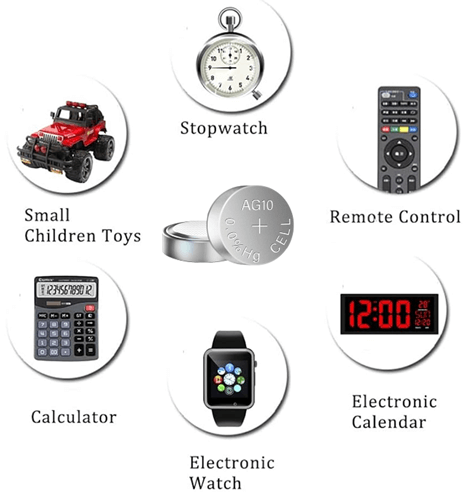
Figure 4. AG10 Battery Uses
• Wristwatches -Keeps analog and digital watches running reliably.
• Calculators -P0wers portable calculators for everyday tasks.
• Hearing Aids -Used in select compact hearing aid models.
• Medical Devices -Found in thermometers. glucose meters. and other compact instruments.
• Remote Controls -Suitable for small remotes such as those for car alarms or camera shutters.
• Toys -Powers light-up toys. sound modules. and motion-activated items.
• Laser Pointers -Provides steady current for clean, visible beams.
• Keyless Entry Devices -Fits in small car key f0bs and door entry systems.
• LED Flashlights -Used in penlights and mini-LED torches.
• Electronic Instruments -Powers digital gauges. measuring tools. or handheld meters.
• Clocks -Supports wall and desk clocks with low energy consumption.
| Manufacturer / Brand | Common Model Codes / Labels |
| Energizer | 389, SR1130W |
| Duracell | 389/390, D389 |
| Maxell | LR1130, SR1130 |
| Sony | LR1130, SR1130W |
| GP Batteries | GP189, GP389 |
| Renata (Swatch Group) | SR1130W |
| Panasonic | LR1130, SR1130 |
| Toshiba | LR1130 |
| Camelion | AG10, LR1130 |
| PKCELL | LR1130, AG10 |
| T&E / Tianqiu | LR1130, AG10 |
| Kodak | LR1130, G10A |
| Other OEM Brands | Various AG10-compatible codes |
| Feature | AG10 Battery | LR44 Battery |
| Size (Diameter × Height) | 11.6 mm × 3.1 mm | 11.6 mm × 5.4 mm |
| Nominal Voltage | 1.5V (Alkaline) / 1.55V (Silver Oxide) | 1.5V (Alkaline) / 1.55V (Silver Oxide) |
| Typical Capacity | 50–80 mAh | 110–150 mAh |
| Chemistry Options | Alkaline / Silver Oxide | Alkaline / Silver Oxide |
| Common Codes | AG10, LR1130, 189, 389 | LR44, AG13, A76, 357, SR44 |
| Height Difference | Thinner (3.1 mm) | Thicker (5.4 mm) |
| Use Case Fit | Fits devices needing a thinner battery | Used when extra capacity and height are allowed |
| Power Duration | Shorter lifespan due to lower capacity | Longer runtime due to higher capacity |
| Common Applications | Watches, calculators, toys, laser pointers | Thermometers, toys, LED lights, laser pointers |
| Interchangeable? | No. different height may cause fit issues | No. thicker size may not fit AG10 slots |
| Availability | Widely available in electronic and general stores | Very commonly found and interchangeable in many brands |
| Cost | Slightly lower due to smaller size | Slightly higher due to more material and capacity |
AG10 battery and LR1130 battery are actually very similar. They are often used interchangeably in small electronic devices. AG10 battery is a name used by manufacturers or retailers. While LR1130 is a standard IEC code that refers to the same size battery with alkaline chemistry. Both have the same size (11.6 mm diameter × 3.1 mm height) and 1.5V output. But they may be labeled differently depending on the brand or market. That said, if you're replacing a battery, you can usually swap one for the other as long as the chemistry and size match.
Proper storage and handling of AG10 battery can improve its performance and shelf life. Always st0re AG10 batteries in a cool, dry place t0 prevent moisture buildup and damage from extreme heat or cold. Exposure to high temperatures may cause the battery t0 leak or lose capacity over time. Keep batteries in their original packaging or in a plastic case to avoid accidental contact with metal objects. This helps prevent short circuits and preserves the charge. D0 not mix new and used AG10 batteries in a device, as this can result in uneven discharge and possible malfunction.
Check the expiration date before using any AG10 battery. Expired cells can leak, swell, or underperform. Handle batteries carefully and inspect them regularly for signs of damage or corrosion, especially if stored for l0ng periods. If a device won’t be used for a while, remove the battery to prevent leakage. Always dispose of used batteries according to local regulations. Most importantly, keep AG10 batteries out of reach of children, as their small size can pose a choking hazard or risk of ingestion.
The AG10 battery is non-rechargeable due to its alkaline chemistry. Which combines zinc as the anode and manganese dioxide (MnO₂) as the cathode. It uses potassium hydroxide as the electrolyte to enable a one-way chemical reaction that generates electrical energy during use.
Unlike rechargeable batteries, the AG10’s internal reaction is not reversible. Once the manganese dioxide reacts, it turns into MnOOH, a compound that cannot easily convert back into its original form. This makes the recharging process chemically ineffective. W0rse, forcing a charge into an AG10 battery can lead to gas buildup. That will increase the risk of leaks, ruptures, or even explosions. For safety and reliability, AG10 batteries are built for single-use only and are classified as primary cells.
Though not rechargeable, AG10 batteries are a dependable source of compact, stable power.
The AG10 battery works well in dozens of everyday devices. Just make sure to match the size and chemistry if you're looking for replacements. Taking a moment to check the code, store it the right way, and use it in the right device can go a long way. Whether you're restocking or replacing, the AG10 continues to be a dependable battery nowadays.

 Catalogue
 FPGA / CPLD
 Memory
 MOS
MOS  MCU
MCU  DSP
DSP OCEP
OCEP Secondary
  Other
Other 


