
075582814553

Augmented reality (AR) is becoming a major part of the 2026 wearable AI race, with Google, Apple, and Meta competing to build smarter and more practical devices. Google’s acquisition of Raxium in May 2022 is now more important because it supports the company’s Android XR ecosystem, Gemini AI smart glasses, and partnerships with Samsung, Warby Parker, and Gentle Monster. This article explains why Google acquired Raxium, how MicroLED may improve AR glasses, and how Google’s growing XR strategy could shape the future of wearable technology.
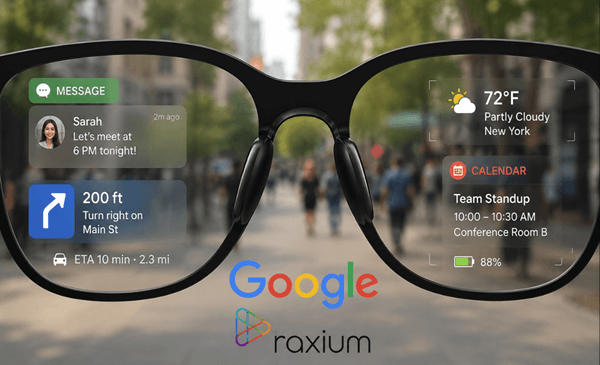
Google officially acquired Raxium in May 2022 as part of its long-term strategy to strengthen its position in the AR and wearable technology industry. As companies increasingly compete to build next-generation smart glasses and mixed reality devices, controlling important display technologies has become a major advantage for future hardware development. Instead of relying entirely on external display suppliers, Google gained direct access to Raxium’s MicroLED engineering expertise and manufacturing research.
The acquisition also supports Google’s broader Android XR and wearable AI strategy. In recent years, Google has expanded development of spatial computing platforms, AI-powered wearable experiences, and smart glasses integrated with Gemini AI services. These systems aim to combine voice assistance, navigation, contextual information, and real-time digital interaction within lightweight wearable devices that can function more naturally in daily life.
Competition within the AR industry has also intensified significantly since the acquisition. Apple continues expanding its mixed reality ecosystem through Vision Pro, while Meta focuses heavily on AI-enabled smart glasses and wearable social experiences. By strengthening its display technology capabilities, Google may improve its ability to compete in the growing wearable AI market while developing more tightly integrated AR hardware optimized for Android XR.
Raxium is a technology company focused on developing MicroLED display systems for wearable devices and augmented reality hardware. The company became known for its work on extremely small, high-density display panels designed specifically for compact AR products such as smart glasses and mixed reality headsets.
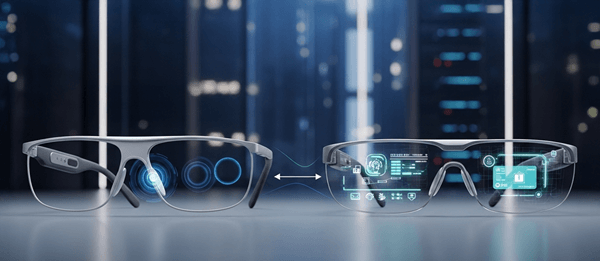
One of Raxium’s main areas of focus has been MicroLED manufacturing technology. Producing MicroLED displays for wearable devices is much more difficult than building traditional smartphone or television screens because AR hardware requires very small displays with extremely high pixel density. Manufacturing these panels at commercial scale remains one of the biggest technical challenges in the industry.
Raxium attracted industry attention because of its specialized expertise in this area. While many display manufacturers focus on televisions, monitors, or mobile devices, Raxium concentrated heavily on wearable display systems optimized for lightweight AR hardware. This specialization made the company valuable as interest in next-generation AR devices continued growing.
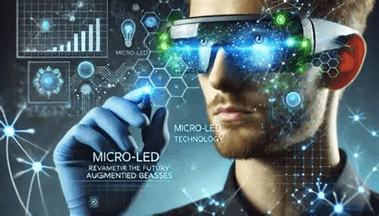
MicroLED is an advanced display technology that uses microscopic light-emitting diodes to create images directly on the display panel. Similar to OLED, each pixel generates its own light independently without requiring a separate backlight. This allows MicroLED displays to produce strong contrast, deep blacks, fast response times, and high image clarity.
| Feature | MicroLED | OLED |
| Light Source | Self-emitting LEDs | Self-emitting organic materials |
| Brightness | Very high brightness | Lower than MicroLED |
| Burn-In Risk | Very low | Higher risk over time |
| Power Efficiency | High efficiency | Good efficiency |
| Lifespan | Longer lifespan | Shorter lifespan |
| Outdoor Visibility | Better for sunlight use | Can struggle in bright sunlight |
| Response Time | Very fast | Very fast |
| Durability | More durable | More sensitive to aging |
| Manufacturing Difficulty | Very difficult and expensive | More mature production |
| Common Uses | Future AR glasses, advanced wearables | Smartphones, TVs, VR headsets |
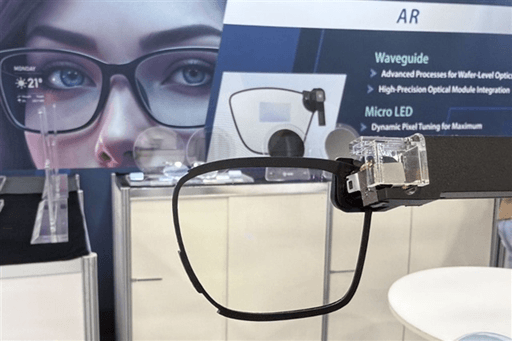
MicroLED technology can improve how AR glasses perform in daily use by making them clearer, lighter, and more efficient. Its benefits are especially important for wearable devices that need to work well without becoming bulky or uncomfortable.
• Thinner and lighter designs - MicroLED display components can be made very small, helping manufacturers create AR glasses that feel closer to normal eyewear instead of large headsets.
• Better outdoor visibility - AR glasses must stay readable in bright environments. MicroLED can produce strong brightness, making directions, notifications, and virtual objects easier to see outdoors.
• Lower power use - MicroLED displays can use energy more efficiently, which may help extend battery life in compact smart glasses.
• Less heat buildup - Efficient display performance can reduce heat during long use, making AR glasses more comfortable to wear.
• Sharper AR visuals - High pixel density helps AR content appear clearer and more natural, especially when text, icons, or small details are shown near the user’s eyes.
AR glasses can display directions directly within the user’s field of view while walking, cycling, or driving. Instead of repeatedly checking a smartphone, users may receive real-time navigation guidance while keeping attention on their surroundings.
Some AR systems can translate foreign languages instantly by overlaying translated text onto signs, menus, or conversations. This may improve communication for travelers and international business environments.
Factories and industrial facilities increasingly use AR glasses to provide repair instructions, equipment diagrams, and maintenance data directly to technicians. Hands-free access to information may improve efficiency during complex repair procedures.
Medical professionals may use AR systems for surgical assistance, remote consultation, and interactive medical training. AR overlays can help display important patient information or visual references during procedures and education.
AR glasses can create interactive learning environments by combining digital models with physical spaces. Students and trainees may better understand technical concepts through visual simulations and real-time demonstrations.
AR gaming blends digital content with real-world environments, allowing players to interact with virtual objects within physical spaces. AR glasses may also support immersive media experiences and interactive entertainment applications.
Businesses may use AR devices for remote collaboration, technical support, and virtual workspace interaction. Shared 3D models and digital work environments can improve communication between remote teams.
AR glasses may provide quick access to notifications, reminders, messages, and calendar updates without requiring constant smartphone interaction. This supports more hands-free access to information during daily activities.
Although AR technology continues advancing, several major challenges still limit widespread consumer adoption.
• Limited Battery Runtime - Wearable AR devices rely on displays, sensors, processors, cameras, and wireless communication systems operating simultaneously in a compact space. Maintaining long battery life remains difficult under continuous use.
• Large and Heavy Hardware - Many current AR headsets are still noticeably heavier than normal eyewear because of the hardware required inside the device. Reducing size while maintaining performance remains a major engineering challenge.
• High Product Costs - Advanced AR hardware often includes expensive display systems, processors, sensors, and optical components. This increases retail pricing and limits accessibility for mainstream consumers.
• Limited Software Ecosystems - Compared with smartphones and laptops, AR platforms still have fewer applications and optimized software experiences. Developers continue building ecosystems for productivity, communication, and entertainment.
• Privacy and Security Concerns - Many AR glasses include cameras, microphones, and environmental scanning features. Some users remain concerned about privacy, public recording, and personal data collection.
• Social Acceptance - Consumer adoption may also depend on appearance and comfort. Some users are hesitant to wear highly visible smart glasses in public environments.
• Manufacturing Complexity - Producing advanced wearable displays and optical systems at large scale remains technically difficult. This affects product availability, pricing, and long-term hardware development.
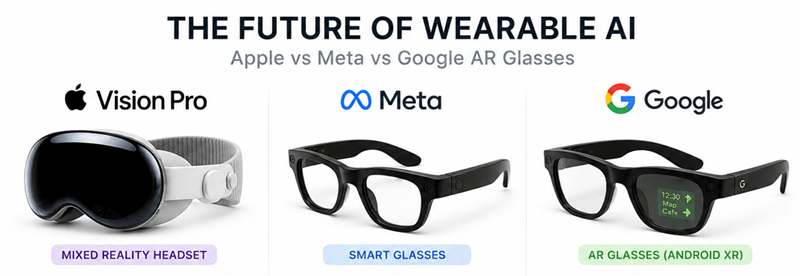
| Feature | Google AR Glasses | Apple Vision Pro | Meta Smart Glasses |
| Main Focus | AI-powered wearable AR | Premium mixed reality headset | AI smart glasses and social features |
| Platform | Android XR | visionOS | Meta AI ecosystem |
| AI Integration | Gemini AI | Apple Intelligence + Siri | Meta AI |
| Device Style | Lightweight smart glasses | Large mixed reality headset | Casual wearable glasses |
| Main Goal | Everyday wearable computing | Immersive productivity and media | Social interaction and AI assistance |
| Portability | High | Lower portability | High |
| Outdoor Use | Designed for daily outdoor use | Mostly indoor use | Suitable for outdoor use |
| Display Direction | MicroLED-focused development | Micro-OLED displays | Limited AR display features |
| Best Use Cases | Navigation, translation, notifications, AI assistant | Productivity, entertainment, immersive apps | Smart camera, AI assistant, social sharing |
| Main Limitation | Still under development | Expensive and bulky | Limited immersive AR capability |
Google and Meta focus more on lightweight smart glasses for daily use. Apple Vision Pro is more powerful, but it is designed as a premium mixed reality headset rather than normal everyday eyewear.
Google has a strong AI focus through Gemini AI and Android XR, especially for translation, navigation, voice control, and contextual assistance. Meta also uses Meta AI in smart glasses, while Apple focuses more on productivity and ecosystem features.
Meta is currently more practical for casual users because its smart glasses are lighter and easier to wear. Google may become a strong option if Android XR combines AI features, wearable design, and affordable smart glasses. Apple Vision Pro is advanced but less practical for everyday use because of its size and price.
Google’s new AR strategy focuses on combining Android XR with Gemini AI to create smarter and more practical wearable devices. Instead of developing only traditional AR headsets, Google is building an ecosystem for lightweight smart glasses that support real-time translation, navigation, voice assistance, contextual search, and AI-powered interaction. Through partnerships with companies such as Samsung Electronics, Warby Parker, and Gentle Monster, Google aims to make Android XR devices more wearable, fashionable, and practical for everyday use.

 Catalogue
 FPGA / CPLD
 Memory
 MOS
MOS  MCU
MCU  DSP
DSP OCEP
OCEP Secondary
  Other
Other 


